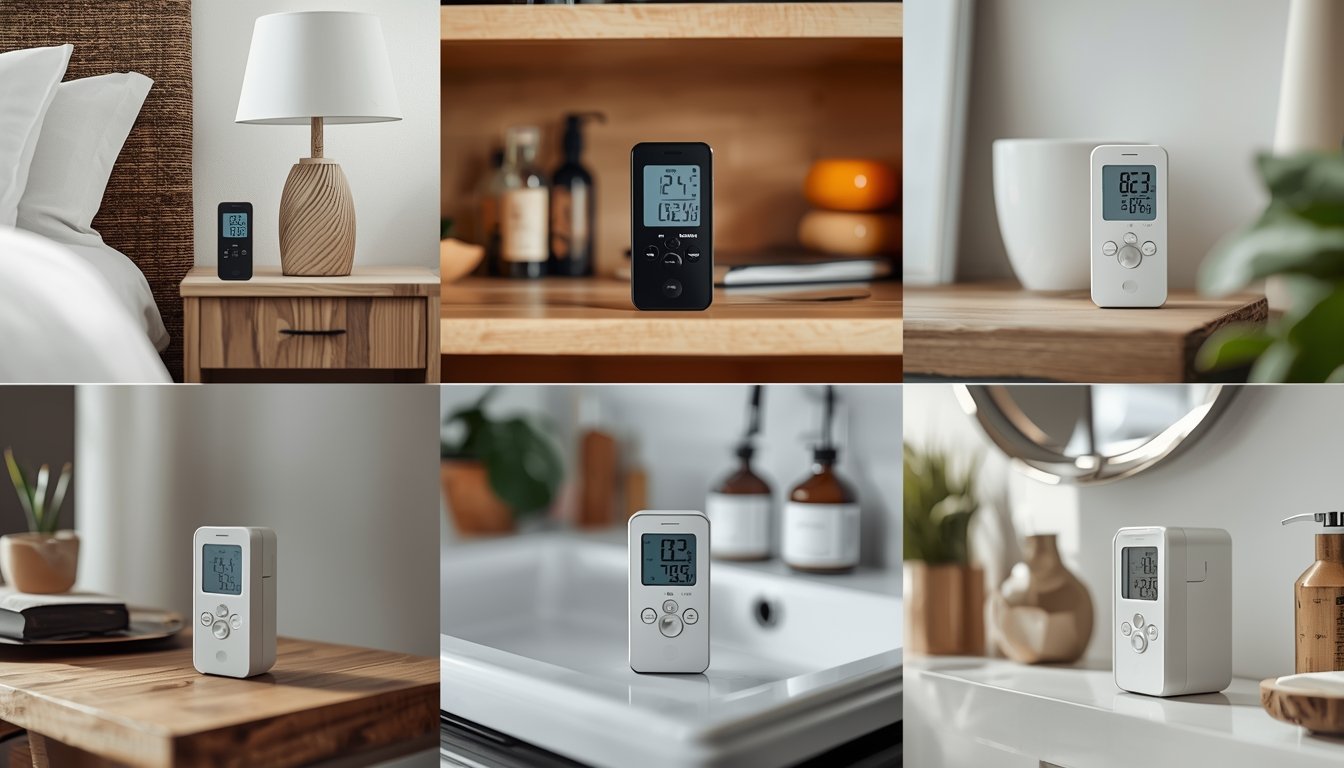
The best places to use a humidity meter in your home are areas where moisture levels vary or problems are likely to develop, such as living rooms, bedrooms, bathrooms, and basements. Monitoring these key locations helps you detect high or low humidity early and maintain a comfortable indoor environment.
Key Living Areas to Monitor Daily Comfort
Living spaces like your lounge room and bedrooms are the most important places to check humidity regularly. These areas reflect your day-to-day comfort and are where you’re most likely to notice the effects of air that is too dry or too humid.
Placing a humidity meter in your main living area gives you a baseline reading for the home. This helps you understand whether conditions are generally within the recommended 30% to 50% range. Bedrooms are equally important, as humidity levels can affect sleep quality, breathing comfort, and overall wellbeing.
For best results:
- Place the meter at breathing height on a shelf or table
- Avoid positioning it near windows or vents
- Leave it in place long enough for readings to stabilise
These locations provide the most useful everyday data. If your living spaces are within the ideal range, your home is likely comfortable overall. However, this doesn’t always reflect what’s happening in more isolated areas.
If you’re unsure how to take consistent readings in these spaces, this guide on how to use a humidity meter in your home explains how to measure accurately and compare results across rooms.
High-Risk Areas Where Humidity Problems Start
Some parts of your home are more prone to humidity issues and should be monitored more closely. These areas often have higher moisture levels due to daily use or limited airflow.
Bathrooms are one of the most common problem areas because of steam from showers. Kitchens can also experience spikes in humidity during cooking, especially if ventilation is poor.
Other high-risk areas include:
- Basements, where moisture can build up due to limited airflow
- Crawl spaces, which often trap damp air
- Laundry areas, particularly when drying clothes indoors
- Closets or corners with restricted air circulation
Monitoring these areas helps you catch issues early before they spread to other parts of the home. Even if these spaces seem fine at first glance, humidity can still be building up without obvious signs.
Regular checks in these locations allow you to take targeted action, such as improving ventilation or using a dehumidifier where needed.
How to Use Multiple Locations to Understand Your Home
Using a humidity meter in different parts of your home gives you a clearer picture of how conditions vary. Humidity is rarely consistent throughout a house, and relying on one location can lead to missed problems.
Start by moving a single meter between rooms over a few days. This helps you identify patterns, such as higher humidity in certain areas or lower levels in others. Once you understand these patterns, you can decide whether you need additional meters in specific locations.
To get the most useful insights:
- Check readings in multiple rooms at different times of day
- Compare areas with high and low moisture exposure
- Focus on rooms where problems are most likely to occur
This approach helps you avoid unnecessary monitoring while still covering the most important areas. Over time, you’ll learn how your home responds to weather, daily activities, and seasonal changes.
By using a humidity meter in the right places, you can maintain balanced conditions throughout your home and prevent issues before they develop.