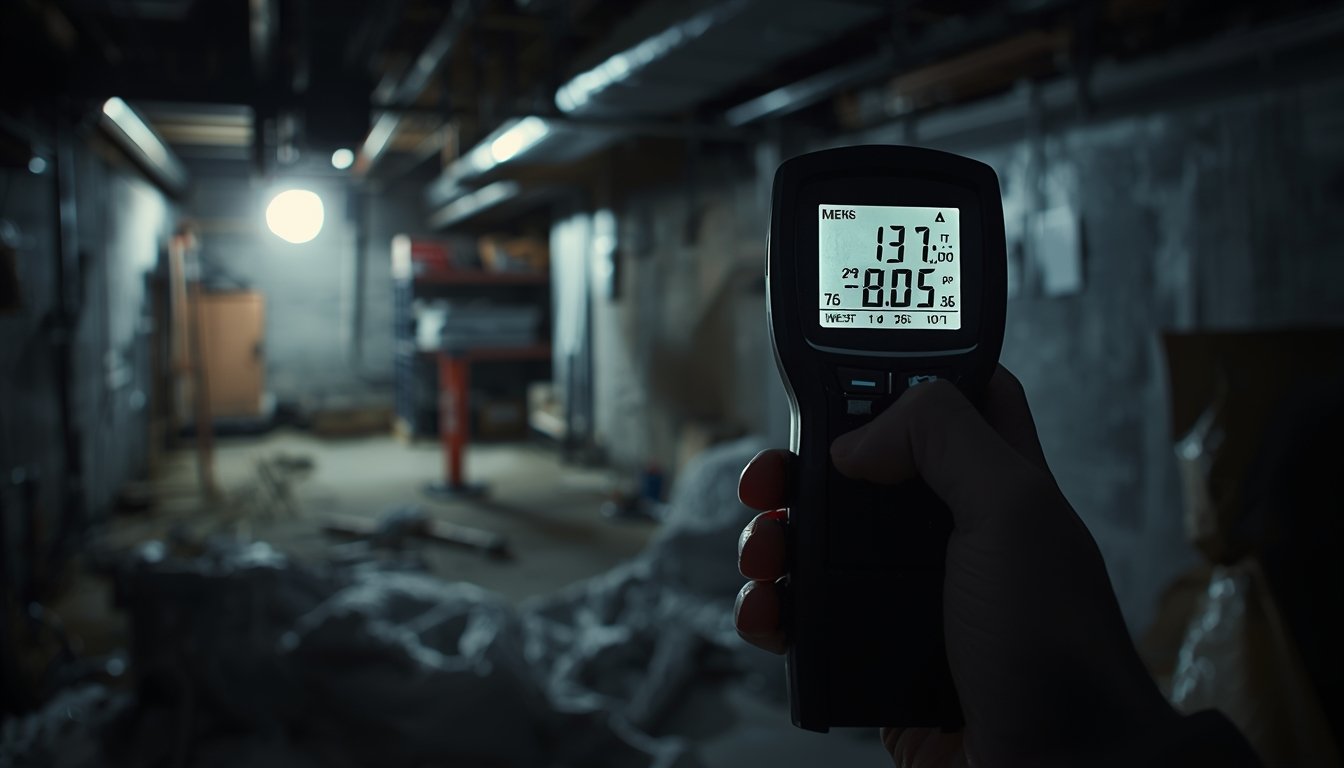
Digital and analog humidity meters both measure moisture in the air, but they do it in different ways. Digital meters use electronic sensors and display precise readings on a screen, while analog meters use mechanical components with a dial and needle. For most homes, digital meters are more accurate and easier to use, but analog models still have their place in simpler setups.
How Digital and Analog Humidity Meters Work
Digital humidity meters rely on electronic sensors that detect changes in moisture levels in the air. These sensors convert the data into a percentage reading, which is displayed clearly on a screen. Most digital models also show temperature, which helps explain changes in relative humidity throughout the day.
Because they use sensors, digital meters can respond quickly to changes in the environment. However, they still need a few minutes to stabilise after being moved. This makes them ideal for checking different rooms and tracking how humidity varies across your home.
Analog humidity meters work differently. They use materials such as coils or strips that expand and contract with moisture changes. This movement shifts a needle on a dial, giving you a visual indication of humidity levels.
While analog meters are simple and reliable, they are generally less precise. They can also drift over time, meaning the readings may become less accurate unless recalibrated. For this reason, they are better suited for general monitoring rather than detailed measurement.
If you want a deeper understanding of how humidity readings work, this humidity meter guide explains how both types fit into managing indoor conditions.
Accuracy Differences Between Digital and Analog Meters
Accuracy is one of the biggest differences between digital and analog humidity meters. Digital models typically offer readings within ±2% to ±5% relative humidity, which is more than sufficient for most home environments.
Analog meters, on the other hand, are usually less precise. Their readings can vary more widely, and they are more sensitive to wear and environmental factors. Over time, this can lead to noticeable differences between the actual humidity level and what the meter displays.
For everyday use, the level of accuracy you need depends on your situation. If you are simply checking whether humidity is too high or too low, an analog meter may be enough. However, if you are trying to manage specific conditions, such as preventing mold or maintaining comfort levels, digital accuracy becomes more important.
It’s also worth noting that placement affects both types. Even a highly accurate digital meter can give incorrect readings if placed near a heat source or draft. Understanding how to position your device correctly is just as important as choosing the right type.
- Digital meters provide more precise readings
- Analog meters offer general humidity indication
- Digital accuracy typically falls within ±2% to ±5%
- Analog meters may drift over time
- Placement affects accuracy for both types
Ease of Use and Everyday Convenience
For most homeowners, ease of use is a key factor when choosing between digital and analog humidity meters. Digital models are designed for convenience, with clear displays that show exact numbers at a glance.
This makes it easy to understand your indoor conditions without needing to interpret a dial. Many digital meters also include additional features such as memory functions, trend indicators, or alerts when humidity moves outside a set range.
Analog meters are simpler. They don’t require batteries or setup, and they can be left in place for long periods without maintenance. This makes them useful for areas where you want a basic, always-visible reading.
However, reading an analog dial can be less precise, especially if you’re trying to track small changes. The lack of exact numbers can make it harder to decide when adjustments are needed.
In practical terms, digital meters are better suited for active monitoring, while analog meters work well for passive observation.
When to Choose Digital or Analog for Your Home
Choosing between digital and analog humidity meters depends on how you plan to use the device. For most homes, digital meters are the better choice because they offer a balance of accuracy, clarity, and flexibility.
If you want to move the device between rooms, track changes over time, or respond quickly to humidity issues, a digital meter is the more practical option. It gives you clear data that you can act on immediately.
Analog meters are a good choice if you prefer simplicity and low maintenance. They work well in areas where you don’t need precise readings, such as storage spaces or workshops.
In some cases, using both types can be useful. For example, you might use a digital meter for detailed monitoring in living areas and an analog meter for general awareness in less critical spaces.
The key is to match the device to your needs. A simple setup that you use consistently will always be more effective than a more advanced option that you rarely check.
- Choose digital for accuracy and detailed monitoring
- Choose analog for simplicity and low maintenance
- Use digital in living areas and bedrooms
- Use analog in storage or secondary spaces
- Consider combining both for broader coverage
Long-Term Reliability and Maintenance
Over time, both digital and analog humidity meters require some level of maintenance to stay reliable. Digital meters depend on electronic sensors, which can lose accuracy gradually, especially in environments with frequent humidity changes.
Battery life is another consideration. Most digital meters require periodic battery replacement, which adds a small amount of upkeep. However, the benefit is consistent performance and reliable readings when maintained properly.
Analog meters, while not dependent on batteries, can also drift over time. The mechanical components inside can wear or lose calibration, leading to less accurate readings. In some cases, they can be adjusted, but this depends on the design of the device.
For both types, occasional comparison with another meter can help you confirm accuracy. This is especially useful if you rely on the readings to manage humidity levels in your home.
In the long run, digital meters tend to provide more consistent performance, while analog meters offer durability and simplicity with less reliance on power.