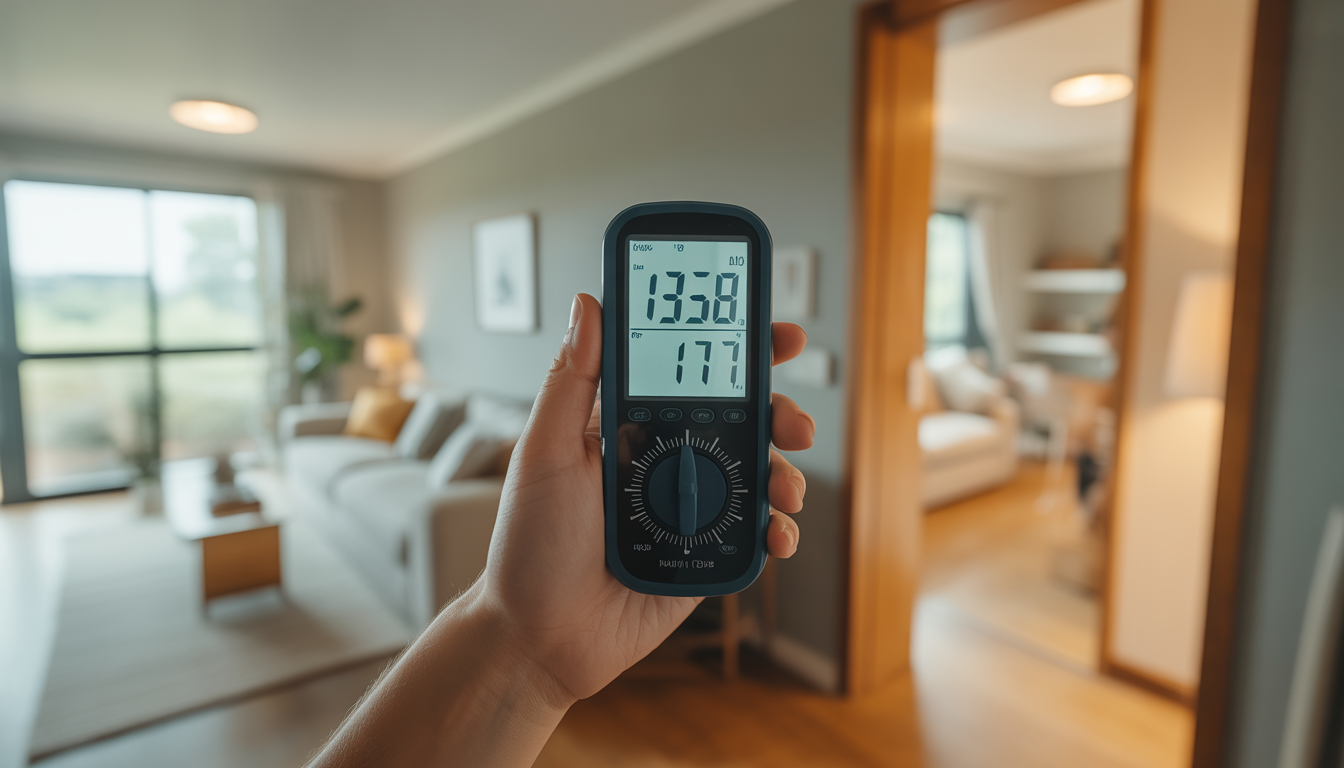
A humidity meter (also called a hygrometer) measures the amount of moisture in the air, helping you understand whether your indoor environment is too dry, too humid, or balanced. It’s used to diagnose comfort issues, prevent mold, and protect your home from moisture-related damage.
What a Humidity Meter Does and Why It Matters
A humidity meter measures **relative humidity (RH)**, which is the percentage of moisture in the air compared to the maximum it can hold at a given temperature. This gives you a clear, real-time snapshot of your indoor air conditions.
In most homes, the ideal indoor humidity level sits between 30% and 50%. When levels move outside this range, problems can start to appear quickly.
High humidity can lead to:
- Mold and mildew growth on walls and ceilings
- Condensation on windows and surfaces
- Musty smells and damp indoor air
Low humidity can cause:
- Dry skin, eyes, and respiratory irritation
- Cracking wood floors or furniture
- Increased static electricity indoors
A humidity meter helps you catch these issues early by showing changes before visible damage or discomfort becomes obvious. Instead of guessing, you can make informed decisions about ventilation, heating, or using a dehumidifier or humidifier.
How to Use a Humidity Meter in Your Home
Using a humidity meter is simple, but where and how you use it makes a big difference in getting accurate readings. Most digital meters give results within seconds, but placement is key.
For best results:
- Place the meter at breathing height, not on the floor
- Avoid direct sunlight, vents, or windows
- Leave it in place for 10–15 minutes to stabilise
You can move the meter between rooms to compare conditions, especially in areas that tend to have moisture issues like bathrooms, basements, or kitchens. If you’re unsure where to start, this guide on where to place a humidity meter explains ideal locations in more detail.
It’s also useful to check humidity at different times of the day. Levels can change depending on weather, cooking, showering, or heating systems, so a single reading doesn’t always tell the full story.
When a Humidity Meter Becomes Essential
While not every home uses one daily, a humidity meter becomes essential when you’re dealing with ongoing comfort or moisture problems. It acts as a diagnostic tool rather than a permanent fixture.
You should strongly consider using one if:
- You notice condensation on windows or walls
- Your home feels damp or has a musty smell
- You experience persistent dry air symptoms
- You’re trying to prevent mold growth in certain areas
It’s also helpful during seasonal changes. In winter, heating systems can dry out indoor air, while summer often brings excess humidity. Monitoring these shifts allows you to adjust conditions before problems develop.
Over time, a humidity meter helps you understand how your home behaves. Instead of reacting to issues after they appear, you can maintain a more stable and comfortable environment with minimal effort.