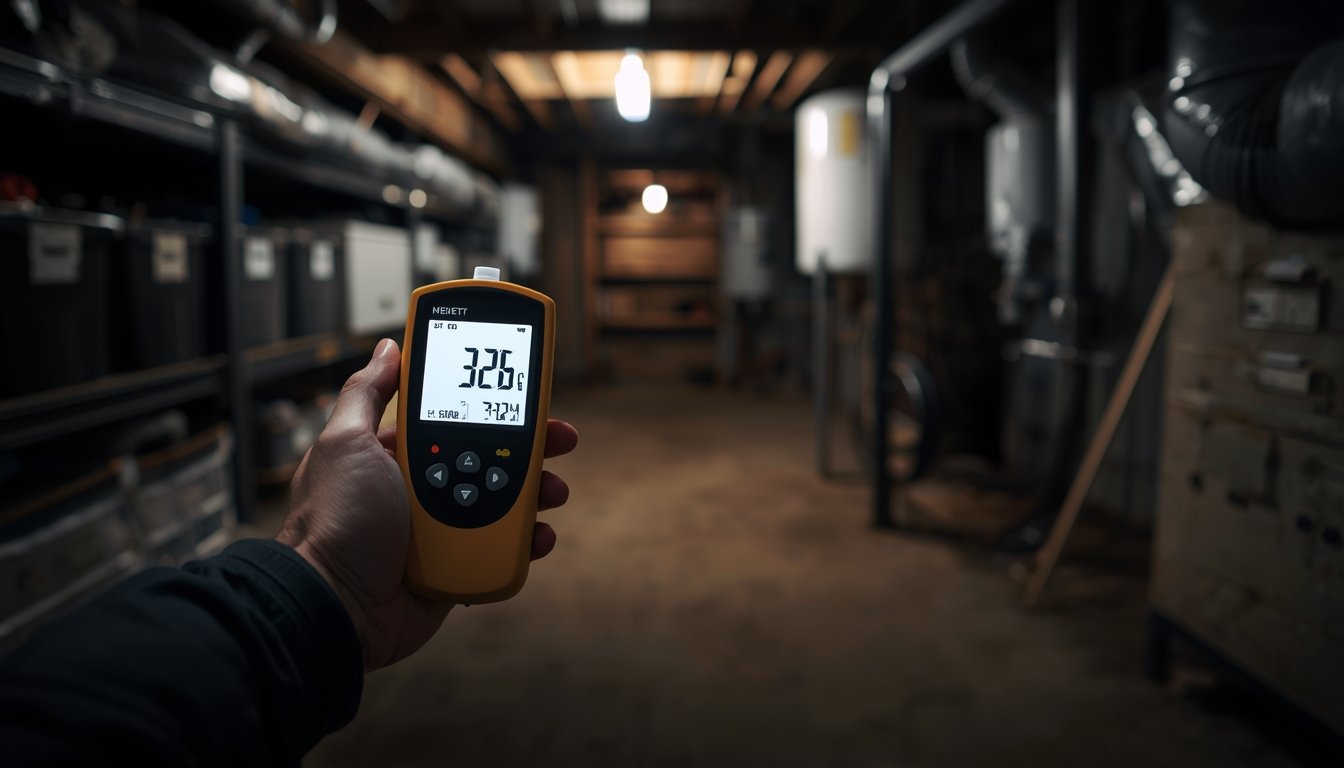
Humidity meters help prevent mold by allowing you to monitor and control moisture levels before mold has a chance to grow. By keeping indoor humidity within the safe range of 30% to 50%, you can stop the conditions that mold needs to develop in the first place.
Why Controlling Humidity Is Key to Preventing Mold
Mold growth is directly linked to moisture. Mold spores are always present in the air, but they only grow when they land on a damp surface and have enough humidity to support development. This means controlling moisture in the air is one of the most effective ways to prevent mold entirely.
When humidity rises above 50% to 60%, moisture begins to settle on surfaces such as walls, ceilings, and furniture. Even if you don’t see visible water, this thin layer of moisture creates the perfect environment for mold to take hold.
This is where a humidity meter becomes valuable. Instead of waiting for visible signs like mold spots or musty smells, you can monitor humidity levels in real time and take action early.
If you want to understand how humidity readings fit into your overall home environment, this humidity meter guide explains how to interpret readings and maintain a balanced indoor space.
By keeping humidity under control, you remove the main condition mold needs to grow, which is far more effective than trying to deal with mold after it appears.
How Humidity Meters Help You Detect Risk Early
One of the biggest advantages of using a humidity meter is early detection. Mold doesn’t appear instantly—it develops over time as moisture builds up. A humidity meter allows you to see rising moisture levels before they turn into visible problems.
Instead of relying on guesswork, you can track humidity levels daily and identify patterns. For example, you might notice that humidity spikes after cooking, showering, or during certain weather conditions.
These early warnings give you time to act. If you see humidity consistently rising above safe levels, you can improve ventilation or use a dehumidifier before mold has a chance to develop.
This proactive approach is especially important in areas that are prone to moisture, such as basements, bathrooms, and crawl spaces. In these environments, humidity can build up quickly and remain high for long periods without obvious signs.
By using a humidity meter regularly, you shift from reacting to problems to preventing them altogether.
- Detect rising humidity before mold becomes visible
- Identify patterns in moisture levels throughout the day
- Monitor high-risk areas like basements and bathrooms
- Confirm whether humidity is within the safe range
- Reduce guesswork when managing indoor moisture
Using Readings to Prevent Mold Growth in Practice
Knowing your humidity level is only useful if you act on it. A humidity meter helps you make practical decisions that directly reduce the risk of mold growth.
When readings stay within the 30% to 50% range, your home is generally safe from mold-related issues. If levels start to rise above this range, it’s a signal that moisture is building up and needs to be managed.
For example, if you notice higher humidity in a bathroom after showers, running an exhaust fan or opening a window can reduce moisture quickly. In a basement, consistently high readings may indicate the need for a dehumidifier.
The key is to respond to patterns rather than one-off readings. A single spike may not be a problem, but consistent high humidity is a clear warning sign.
Over time, you’ll learn how your home responds to different conditions. This allows you to make small adjustments that prevent mold from ever becoming an issue.
Where Humidity Meters Are Most Effective for Mold Prevention
Humidity meters are most effective when used in areas where mold is most likely to develop. These are typically spaces with limited airflow, higher moisture levels, or temperature differences that encourage condensation.
Bathrooms and kitchens are common problem areas because they generate moisture daily. Basements and crawl spaces are also high-risk because they tend to trap moisture and dry out slowly.
Other areas to monitor include:
- Rooms with poor ventilation or limited airflow
- Areas near windows where condensation forms
- Closets or storage spaces with restricted air movement
- Laundry areas where moisture is released indoors
By placing humidity meters in these locations, you can monitor conditions continuously and catch problems early. This targeted approach is far more effective than relying on a single reading from one part of the home.
Consistent monitoring in high-risk areas gives you a clear picture of where moisture is building up and where action is needed.
- Bathrooms and kitchens where moisture is produced daily
- Basements and crawl spaces with limited airflow
- Areas prone to condensation near windows
- Closets and storage spaces with trapped air
- Laundry areas where indoor drying increases humidity
Long-Term Mold Prevention Through Consistent Monitoring
Preventing mold is not about a one-time fix—it requires ongoing awareness and small adjustments over time. A humidity meter supports this by giving you consistent feedback on your indoor environment.
By checking humidity regularly, you can maintain stable conditions and avoid sudden spikes that lead to mold growth. This is especially important during seasonal changes when humidity levels can shift quickly.
Over time, you’ll develop a better understanding of how your home behaves. You’ll know which areas tend to become humid and when changes are likely to occur. This allows you to act quickly and prevent moisture from building up.
Consistency is the key. A humidity meter is most effective when it becomes part of your routine, rather than something you only use when a problem appears.
By combining regular monitoring with simple adjustments, you can create an environment where mold cannot easily develop, protecting both your home and your indoor air quality.