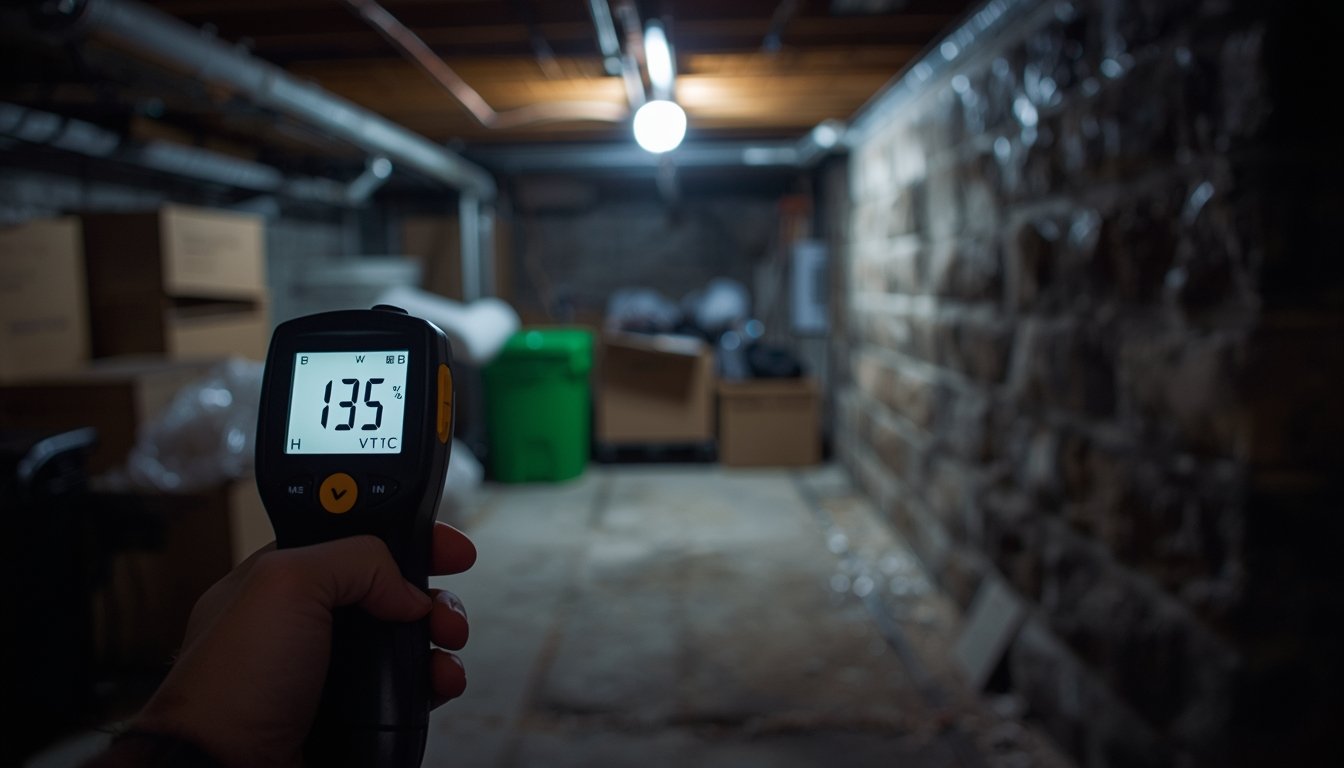
A humidity meter measures the amount of moisture in the air, expressed as relative humidity (RH). It tells you how much water vapour is present compared to the maximum the air can hold at a given temperature. This helps you understand whether your indoor environment is too dry, too humid, or balanced.
What Relative Humidity Actually Means
When a humidity meter gives you a reading, it is measuring relative humidity, not absolute moisture content. Relative humidity is a percentage that compares how much moisture is in the air to how much it could hold at that temperature.
For example, a reading of 50% means the air is holding half the moisture it is capable of holding at that moment. This is why humidity readings can change even if the amount of moisture in the air stays the same. If temperature increases, the air can hold more moisture, so the relative humidity percentage drops.
This relationship between temperature and moisture is important because it explains why humidity levels fluctuate throughout the day. A room may feel comfortable in the morning but become humid in the afternoon as temperatures rise.
Understanding this concept helps you interpret readings correctly. Instead of focusing only on the number, you can consider how temperature changes affect what that number actually means for your home.
How a Humidity Meter Detects Moisture in the Air
Inside a humidity meter is a sensor that reacts to moisture in the surrounding air. Most modern devices use electronic sensors that change their electrical properties depending on how much moisture is present.
As humidity increases, the sensor absorbs moisture and its electrical resistance or capacitance changes. The device then converts this change into a percentage reading that you see on the display.
Different types of sensors can vary slightly in how they operate, but they all serve the same purpose: detecting how much moisture is present in the air at that moment.
This process happens quickly, but it’s not instantaneous. That’s why it’s important to leave the device in one place for several minutes before taking a reading. The sensor needs time to adjust to the surrounding air conditions.
Because the measurement is based on the immediate environment around the device, placement plays a major role in accuracy. Even a high-quality meter will give misleading results if it is placed near a heat source or draft.
What a Humidity Meter Reading Tells You About Your Home
A humidity reading gives you practical insight into your indoor environment and helps you identify potential problems before they become visible.
When readings fall within the 30% to 50% range, your home is generally in a comfortable and balanced state. Outside this range, the reading becomes a warning sign that adjustments may be needed.
A high reading suggests excess moisture, which can lead to mold growth, condensation, and poor air quality. A low reading indicates dry air, which can cause discomfort and affect materials like wood.
By understanding what the number represents, you can take action based on real data rather than guesswork. This is especially useful in areas where humidity fluctuates, such as basements, bathrooms, or bedrooms.
If you’re new to using these devices, this humidity meter guide explains how readings fit into the bigger picture of maintaining a balanced indoor environment.
- Relative humidity percentage shown on the display
- Temperature, often included on digital models
- Changes in moisture levels over time
- Differences between rooms or locations
- Whether air is within the ideal comfort range
What a Humidity Meter Cannot Measure
While humidity meters are useful, they have limitations. They do not measure everything related to moisture, and understanding these limits helps you avoid misinterpreting the data.
A humidity meter does not detect water inside walls, floors, or materials. It only measures moisture in the air. This means that hidden leaks or damp structures may not always show up clearly in the readings.
It also does not identify the source of moisture. If humidity is high, the meter can confirm the problem, but it won’t tell you whether it’s caused by ventilation issues, leaks, or external conditions.
Additionally, readings are specific to the immediate area around the device. If one part of a room is damp and another is dry, the meter will only reflect the conditions where it is placed.
Because of these limitations, it’s important to use humidity readings as part of a broader assessment rather than relying on them alone.
- Hidden moisture inside walls or building materials
- Exact source of humidity problems
- Water leaks behind surfaces
- Structural damage caused by moisture
- Air quality beyond moisture levels
How to Use This Information in Real Situations
Understanding what a humidity meter measures allows you to use it more effectively in your home. Instead of reacting to a single reading, you can track patterns and make informed decisions.
Start by checking humidity in different rooms and at different times of day. This helps you identify trends, such as consistently high humidity in certain areas or low levels during specific seasons.
Once you understand these patterns, you can take targeted action. For example, if humidity is consistently high in a basement, you may need better ventilation or a dehumidifier. If it’s low in a bedroom during winter, adding moisture may improve comfort.
The key is to use the meter as a guide rather than a one-time solution. Regular monitoring gives you a clearer picture of how your home behaves over time.
By combining accurate readings with practical adjustments, you can maintain a stable indoor environment and avoid the common problems caused by imbalanced humidity levels.