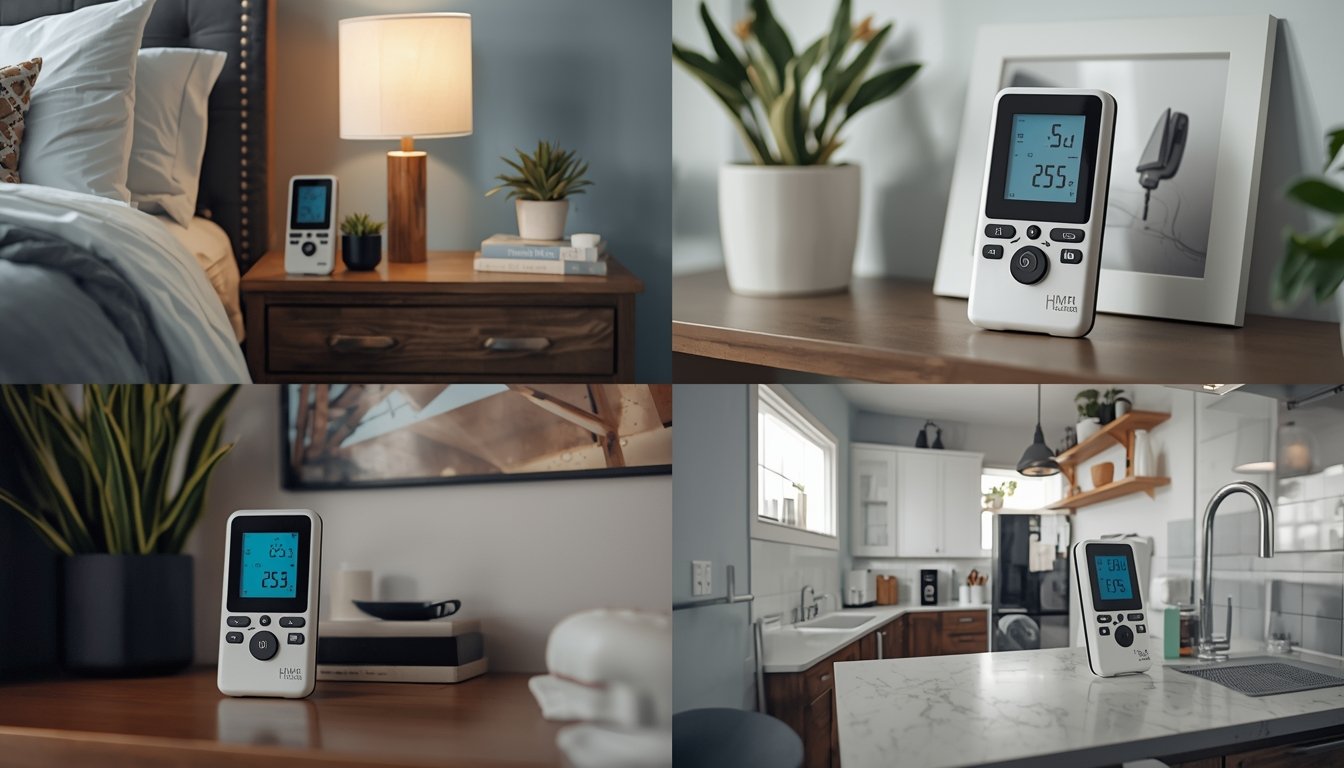
To measure humidity in a bedroom, place a humidity meter at breathing height in a stable location, allow it to settle for several minutes, and read the relative humidity level. This gives you an accurate picture of how the air feels while you sleep and helps you maintain a comfortable environment.
How to Take Accurate Humidity Readings in a Bedroom
Getting an accurate reading in a bedroom depends mainly on placement and consistency. Bedrooms can have subtle airflow patterns, so positioning the humidity meter correctly is essential.
Place the meter on a bedside table, shelf, or dresser at about chest height. This reflects the air you’re actually breathing rather than cooler air near the floor or warmer air near the ceiling.
For best accuracy:
- Keep the meter away from windows and direct sunlight
- Avoid placing it near heaters, vents, or air conditioners
- Leave it in one position for at least 10–15 minutes before checking
Avoid moving the meter frequently, as this can cause fluctuating readings. If you want to compare different areas of the room, move it slowly and allow time for it to stabilise each time.
If you’re unsure how to use your device properly across different rooms, this guide on how to use a humidity meter in your home explains how to get consistent and reliable results.
Why Bedroom Humidity Matters for Comfort and Sleep
Humidity levels in your bedroom have a direct impact on how comfortable you feel at night. Air that is too dry or too humid can affect sleep quality, breathing, and overall comfort.
When humidity is too low, the air can feel dry and irritating. This often leads to dry skin, a scratchy throat, or nasal discomfort, especially during winter when heating systems are running.
When humidity is too high, the air can feel heavy and uncomfortable. This can make it harder for your body to cool down, which may disrupt sleep.
Common bedroom-related humidity issues include:
- Dry air causing irritation or discomfort overnight
- Excess humidity making the room feel warm and stuffy
- Condensation forming on windows in colder weather
Because you spend several hours at a time in your bedroom, even small humidity imbalances can have a noticeable effect. Monitoring levels helps you maintain a more stable and comfortable sleeping environment.
How to Maintain Ideal Humidity in Your Bedroom
Once you’ve measured humidity in your bedroom, the goal is to keep it within the recommended 30% to 50% range. This range supports both comfort and a healthy indoor environment.
If your readings are outside this range, small adjustments can usually bring conditions back into balance. The key is to respond to patterns rather than one-off readings.
To improve bedroom humidity:
- Use a humidifier if levels are too low
- Use a dehumidifier if levels are too high
- Adjust heating or airflow to avoid extreme dryness
- Allow fresh air in when conditions are suitable
It’s also helpful to check humidity at different times, such as before bed and in the morning. This shows how conditions change overnight and whether adjustments are needed.
By regularly measuring and adjusting humidity, you can create a bedroom environment that supports better comfort and more consistent sleep.