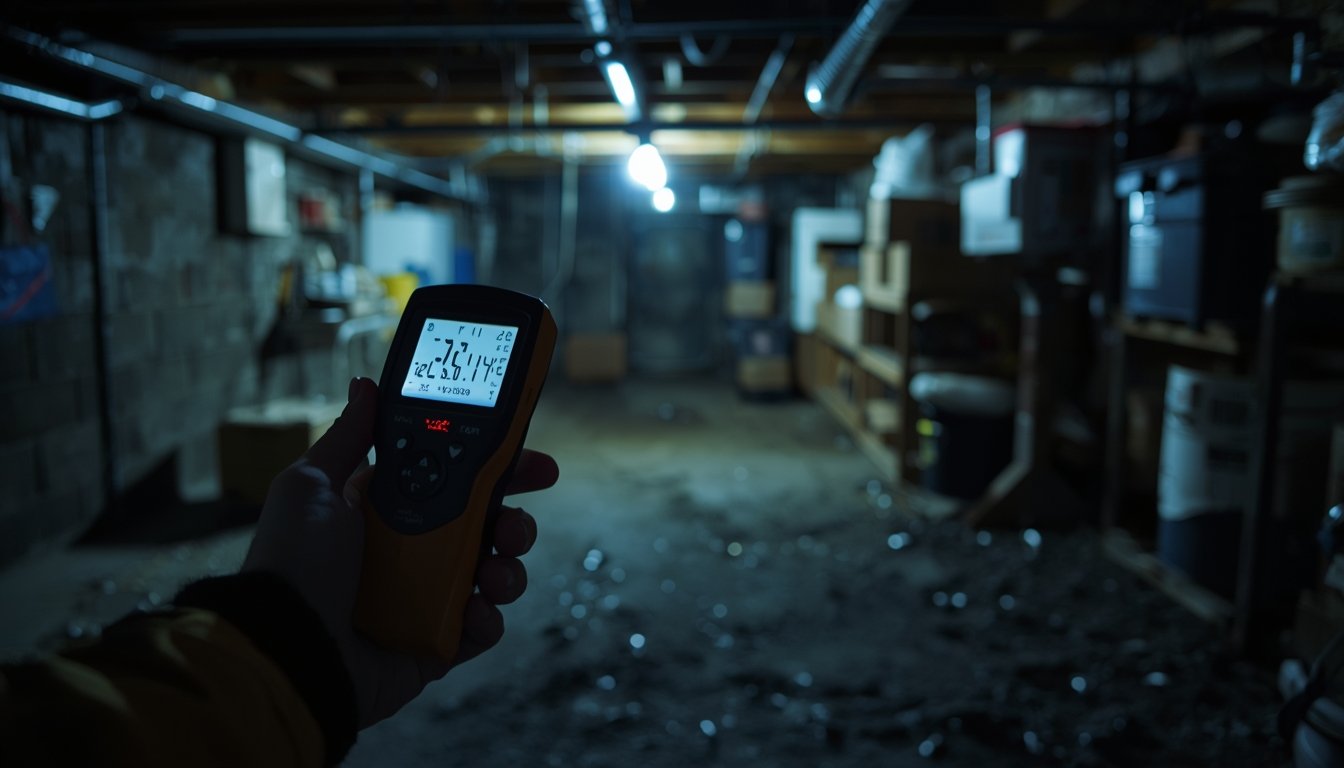
To test humidity in a crawl space, place a humidity meter in a central, stable location within the space, allow it to stabilise, and check the relative humidity reading. Crawl spaces often trap moisture, so accurate placement and regular monitoring are essential to detect and prevent damp conditions.
How to Measure Humidity in a Crawl Space Correctly
Crawl spaces are enclosed and often have limited airflow, which makes accurate measurement especially important. Start by placing your humidity meter in a location that represents the overall space, not directly against walls, soil, or pipes.
Because crawl spaces can have uneven moisture levels, avoid placing the meter in corners or near obvious damp spots. Instead, position it slightly elevated if possible, such as on a block or stable surface, so it measures the surrounding air rather than surface moisture.
For reliable readings:
- Keep the meter away from direct contact with the ground
- Avoid placing it near vents or openings
- Leave it in place for at least 15 minutes before checking
If your crawl space is large or has multiple sections, move the meter to different areas and repeat the process. This helps identify whether moisture is localised or affecting the entire space.
If you’re unsure how to handle readings across different environments, this guide on how to use a humidity meter in your home explains how to take consistent measurements and compare results.
Signs of High Humidity in a Crawl Space
Crawl spaces are particularly vulnerable to high humidity, and problems can develop without being immediately visible. Recognising the signs helps you act early before moisture causes structural damage.
One of the most common indicators is a damp or musty smell coming from below the home. This often means moisture is present even if you can’t see it directly.
Other signs include:
- Mold or mildew forming on wooden beams or insulation
- Condensation on pipes or surfaces
- Wood that feels damp or shows signs of swelling
- Standing water or persistent damp soil
These conditions can worsen over time if humidity remains high. Crawl spaces don’t dry out as quickly as other areas, so moisture tends to linger and build up.
Even if you don’t see obvious signs, a high humidity reading alone is enough to indicate a problem. Regular checks help confirm whether conditions are improving or getting worse.
How to Control Humidity in a Crawl Space
Once you’ve measured humidity in your crawl space, the goal is to reduce and stabilise it. Ideally, humidity should stay within the 30% to 50% range, although crawl spaces often require extra management to stay within this level.
Start by addressing any obvious moisture sources, such as leaks or water entry points. Without fixing these, humidity will continue to rise regardless of other efforts.
To reduce crawl space humidity:
- Use a dehumidifier designed for enclosed spaces
- Improve ventilation where possible
- Install a moisture barrier over exposed soil
- Ensure proper drainage around the home
Monitoring is just as important as taking action. Crawl space conditions can change with weather, rainfall, and seasonal shifts, so regular checks help you stay ahead of potential problems.
By measuring humidity accurately and maintaining control over moisture levels, you can protect your home’s structure and prevent long-term issues caused by damp conditions.