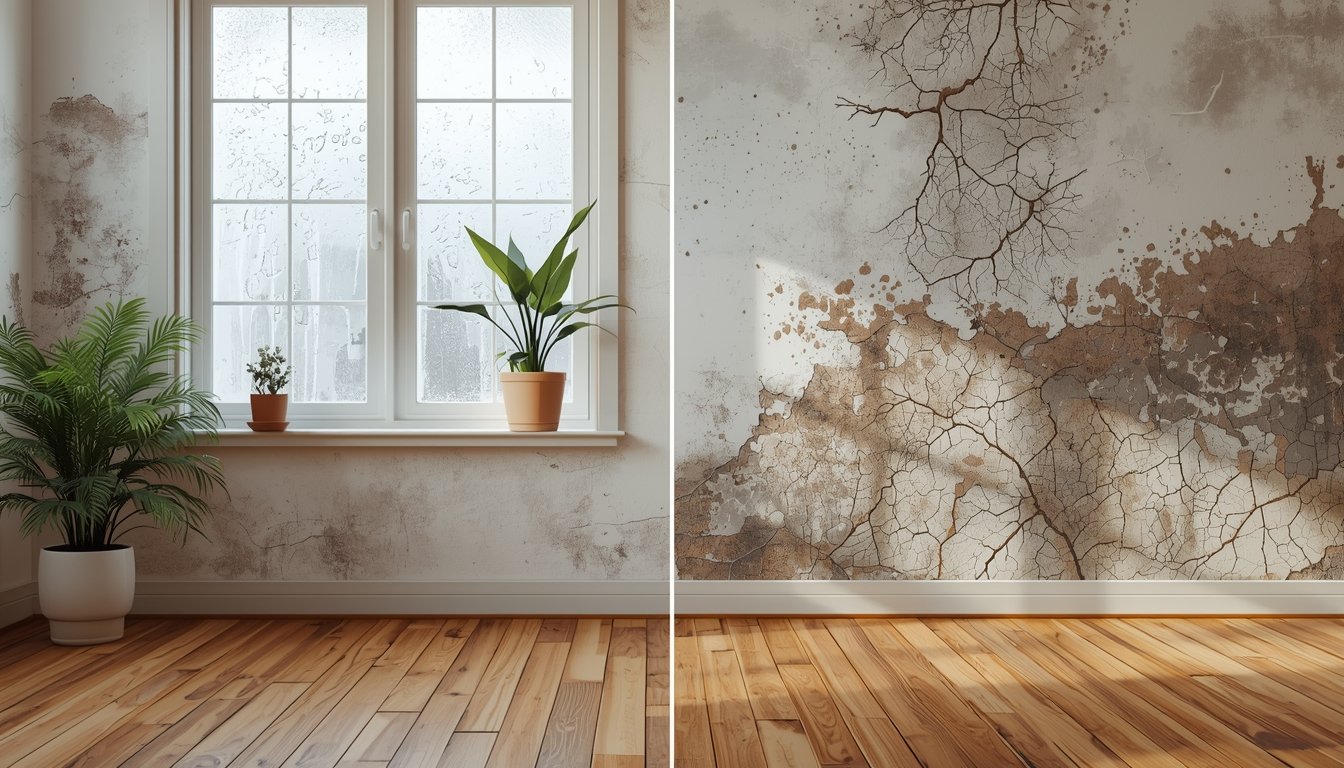
Humidity directly impacts mold growth because mold needs moisture to develop and spread. When indoor humidity rises above about 50–60%, it creates the ideal environment for mold to grow on surfaces like walls, ceilings, and furniture. Controlling humidity is one of the most effective ways to prevent mold problems in your home.
Why High Humidity Leads to Mold Growth
Mold spores are naturally present in the air, but they only grow when they land on a damp surface. High humidity increases the amount of moisture in the air, which then settles on surfaces and creates the conditions mold needs to develop.
Even if there are no visible leaks, excess humidity can still lead to moisture buildup. This often happens in areas where airflow is limited, such as bathrooms, basements, or behind furniture placed against walls.
Common conditions that encourage mold growth include:
- Humidity levels consistently above 50–60%
- Poor ventilation in enclosed spaces
- Condensation forming on windows or walls
- Damp materials that do not dry out properly
Once mold begins to grow, it can spread quickly if humidity remains high. This is why controlling moisture levels is more important than simply cleaning visible mold. Without addressing the humidity, the problem is likely to return.
Where Mold Is Most Likely to Develop
Mold tends to appear in areas where moisture is consistently present or where air circulation is poor. Identifying these high-risk areas helps you focus your efforts on prevention.
Bathrooms are one of the most common problem areas because of frequent steam from showers. Kitchens can also develop mold due to cooking moisture, especially if ventilation is limited.
Other high-risk areas include:
- Basements with limited airflow and higher moisture levels
- Crawl spaces where damp conditions are common
- Areas around windows where condensation forms
- Closets or corners with restricted air movement
These areas may not always show visible mold immediately, but humidity can still be building up. Regularly checking these spaces helps you catch problems early before they become more serious.
If you’re unsure whether humidity is reaching levels that support mold growth, this guide on how to use a humidity meter in your home explains how to measure it accurately and monitor problem areas.
How to Control Humidity to Prevent Mold
Preventing mold comes down to keeping indoor humidity within a safe range, ideally between 30% and 50%. Once humidity rises above this range for extended periods, the risk of mold increases significantly.
Start by improving ventilation in areas where moisture builds up. Simple actions like using exhaust fans or opening windows can help remove humid air before it settles on surfaces.
To reduce humidity levels:
- Use a dehumidifier in damp or enclosed spaces
- Run exhaust fans during and after cooking or showering
- Fix leaks or water damage quickly
- Avoid trapping moisture by improving airflow
It’s also important to monitor humidity regularly rather than reacting after mold appears. Small changes in moisture levels can make a big difference in preventing long-term problems.
By keeping humidity under control and addressing moisture sources early, you can significantly reduce the risk of mold and maintain a healthier indoor environment.