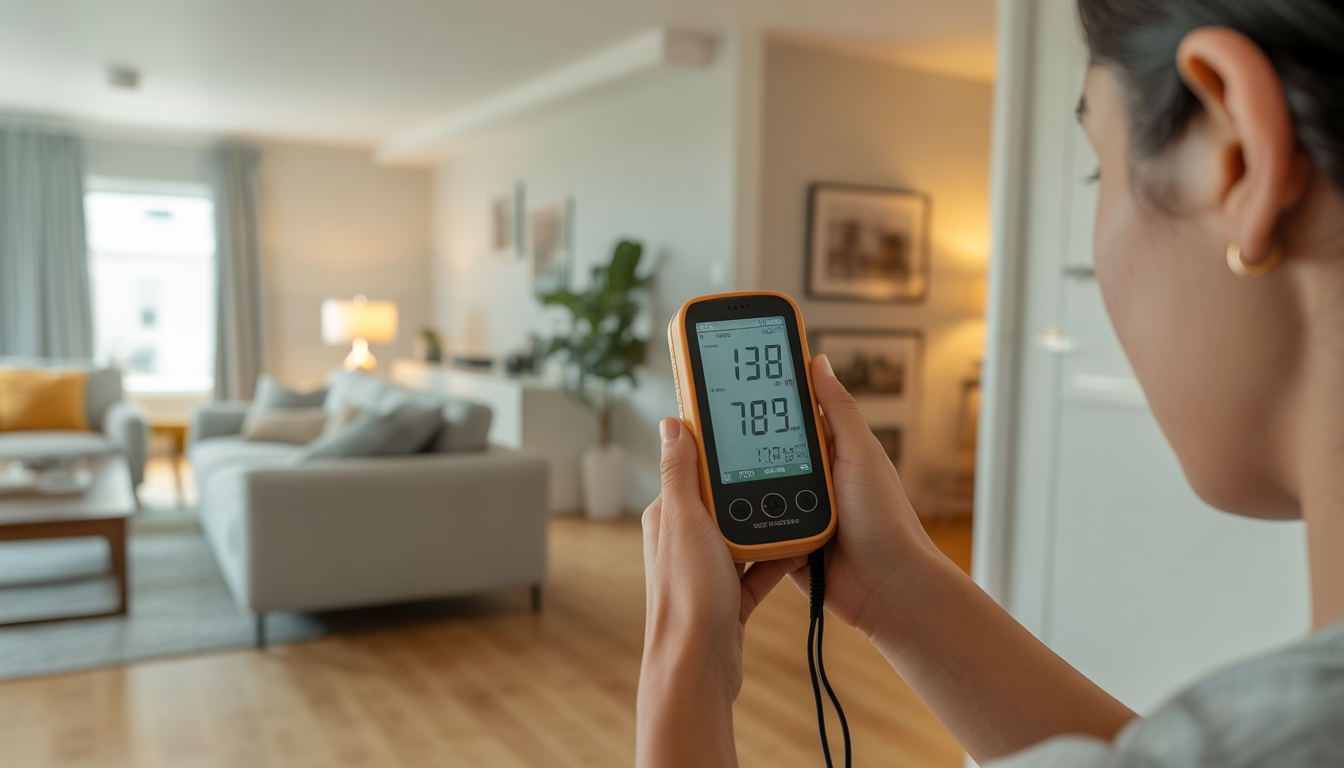
To use a humidity meter in your home, place it in the area you want to measure, allow it to stabilise for a few minutes, and read the relative humidity (RH) on the display. The key is correct placement and consistent checking so you can spot patterns and adjust conditions when needed.
How to Get an Accurate Humidity Reading
Getting a reliable reading depends more on placement than the device itself. A humidity meter will quickly display a number, but if it’s positioned incorrectly, that number may not reflect the true conditions of the room.
Start by placing the meter at about chest or breathing height. Avoid putting it directly on the floor, near windows, or next to vents, as these areas can give distorted readings due to drafts or temperature changes.
For best accuracy:
- Keep the meter away from direct sunlight
- Avoid placing it near heaters or air conditioners
- Leave it in one spot for 10–15 minutes before reading
After placing the meter, give it time to stabilise. Even though digital devices respond quickly, the surrounding air needs a few minutes to settle. Moving the device too often can lead to inconsistent results.
If you want to compare rooms, move the meter gradually and repeat the same process in each location. This helps you identify problem areas rather than relying on a single reading from one part of the home.
Where and When to Use a Humidity Meter
You can use a humidity meter in any room, but some areas are more important than others. Focus on spaces where moisture tends to build up or where comfort issues are noticeable.
Common areas to check include:
- Bathrooms, where steam raises humidity levels quickly
- Kitchens, especially during cooking
- Basements or crawl spaces, which often trap moisture
- Bedrooms, where comfort levels matter most
It’s also important to check humidity at different times of the day. Levels can change depending on daily activities such as showering, cooking, or running heating systems. Morning and evening readings often give a better overall picture than a single midday check.
If you’re unsure where to place your device for the most useful results, this guide on where to place a humidity meter explains the best positions for different rooms and situations.
Using the meter regularly helps you understand how your home behaves. Over time, you’ll notice patterns, such as higher humidity after certain activities or lower levels during colder weather.
How to Use Readings to Fix Humidity Problems
Once you have accurate readings, the next step is knowing what to do with them. A humidity meter is most useful when it leads to action, not just observation.
If your readings are above 50%, you’re dealing with excess moisture. This can increase the risk of mold and condensation. In this case, focus on reducing humidity by improving airflow or removing moisture sources.
If your readings are below 30%, the air is too dry. This often happens during winter and can lead to discomfort or damage to materials in your home.
Based on your readings:
- Use ventilation or a dehumidifier if humidity is too high
- Add moisture with a humidifier if levels are too low
- Adjust heating or airflow to stabilise conditions
It’s also helpful to track changes over time rather than reacting to a single reading. A one-off spike or drop may not require action, but consistent patterns usually do.
By checking humidity regularly and making small adjustments, you can maintain a more stable and comfortable indoor environment without guesswork.